

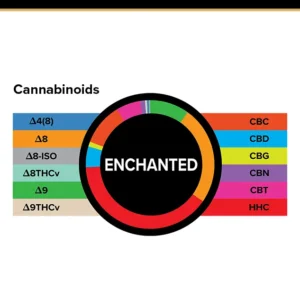



The True Strains Gummies Enchanted brings the Enchanted range to Heartwood Hemp. You can also search for the Premium True Strains Gummies and compare the True Strains Gummies on the same page. The True Strains Gummies Enchanted keeps its profile from the first draw to the last.
Every batch behind the True Strains Gummies Enchanted ties to a dated lab sheet. We seal each True Strains Gummies Enchanted before it leaves the building.
Why the True Strains Gummies Enchanted Suits a Daily Routine
The True Strains Gummies Enchanted divides easily and travels without hardware. True Strains Gummies needs no battery, no coil and no cleaning.
Because each piece is dosed evenly, the True Strains Gummies Enchanted is simple to repeat. Premium True Strains Gummies keeps that same portion control.
A sealed jar protects the texture, so the True Strains Gummies Enchanted stays soft between orders. Lab Tested True Strains Gummies holds its bite the same way.
Anyone who prefers a slower onset tends to choose the True Strains Gummies Enchanted. Sealed True Strains Gummies sits beside it as a lighter option for daytime.
The True Strains Gummies Enchanted prints its batch code and serving guide on the pack.
What Comes With the True Strains Gummies Enchanted?
Every order ships the True Strains Gummies Enchanted in a sealed jar or box. The count and the strength are printed on the front, so one glance tells you the serving size.
The pack also carries the batch code. Keep that code, since it points to the report behind your exact run.
Most buyers return for the True Strains Gummies Enchanted once they know the strength.
How Do You Take the True Strains Gummies Enchanted?
Start with one piece and wait the full onset window before you decide anything. Chewing and swallowing matter less than the wait.
Store the remainder in a cool, dry cupboard and keep the lid closed. Neither heat nor dampness improves the True Strains Gummies Enchanted.
A sealed True Strains Gummies Enchanted also holds its flavour between orders.
Buying the True Strains Gummies
The True Strains Gummies arrives as a sealed retail unit. A True Strains Gummies often suits a first order. Most shoppers compare the True Strains Gummies before they commit.
You can pair the True Strains Gummies with a second profile. Buyers treat the True Strains Gummies as a safe reorder. Repeat customers keep the True Strains Gummies on a monthly list.
Buying the Premium True Strains Gummies
The Premium True Strains Gummies arrives as a sealed retail unit. A Premium True Strains Gummies often suits a first order. Most shoppers compare the Premium True Strains Gummies before they commit.
You can pair the Premium True Strains Gummies with a second profile. Buyers treat the Premium True Strains Gummies as a safe reorder. Repeat customers keep the Premium True Strains Gummies on a monthly list.
Buying the Lab Tested True Strains Gummies
The Lab Tested True Strains Gummies arrives as a sealed retail unit. A Lab Tested True Strains Gummies often suits a first order. Most shoppers compare the Lab Tested True Strains Gummies before they commit.
You can pair the Lab Tested True Strains Gummies with a second profile. Buyers treat the Lab Tested True Strains Gummies as a safe reorder. Repeat customers keep the Lab Tested True Strains Gummies on a monthly list.
Buying the Sealed True Strains Gummies
The Sealed True Strains Gummies arrives as a sealed retail unit. A Sealed True Strains Gummies often suits a first order. Most shoppers compare the Sealed True Strains Gummies before they commit.
You can pair the Sealed True Strains Gummies with a second profile. Buyers treat the Sealed True Strains Gummies as a safe reorder. Repeat customers keep the Sealed True Strains Gummies on a monthly list.
Simple Buying Notes
This page keeps the basics in plain words. You can read it in a minute. First, note what you want. Then, check the pack size. Next, look at the strength on the front. After that, scan the batch code. Finally, keep the pack sealed and cool.
A calm approach saves time. Order only what you will use. Since the label lists every number, there is little to guess. If you need help, our team is close by. We answer most notes the same day.
Prices shift with the pack size. Some folks like a small jar. Others want a full case. Either way works. Choose the option that suits your shelf.
Table of Contents
Reading the Label Without Guesswork
A clear label answers four questions: what is inside, how much is in each serving, how many servings the pack holds, and when it was made. Those four facts let you compare two products on equal terms. When a label hides any of them, treat that as a signal rather than a minor omission.
Look for a batch number as well. That short code links the exact unit in your hand to a tested sample, so a stored report can confirm what you bought. Photograph the label before you open the pack if you like to keep records. It takes a second. It also makes a reorder painless later, since the code is already on your phone.
What a Potency Number Really Means
A potency figure states how much active material sits in one unit or one serving, not how strong the effect will feel. Two people can take the same number and report very different experiences. Body weight, tolerance, recent meals and the time of day all move the needle, and none of them appear on the package.
That is why the printed number works best as a reference point rather than a promise. Use it to compare items against each other, then adjust for how you actually respond. Keep a short note of what you tried and how it went. After a few entries a pattern shows up, and the pattern is far more useful than any single review you might read online.
Onset, Peak and Duration
Every route has a rough timeline. Some formats act within minutes, while others build slowly over an hour or more. Effects then plateau, hold for a while, and taper. Knowing the shape of that curve matters more than knowing a single headline number, because it tells you when to stop rather than top up.
The common mistake is stacking doses during the climb. When the first wave feels mild, it is tempting to take more. Then the delayed portion arrives all at once. Give the format its full runway before you decide anything. A patient approach almost always produces a steadier, more comfortable session than a hurried one.
Finding Your Starting Point
New users usually do best by beginning at the low end of a range and waiting. A modest first serving tells you more than a large one, because a gentle result is easy to read while an overwhelming one tells you nothing useful. Once you know how a small amount lands, you can add with confidence.
Write the number down, along with the date and the time. Two weeks later that note will be worth more than your memory of the evening. If the first attempt did too little, step up gently rather than doubling. If it did too much, step back and stay there for a few sessions. Small, deliberate moves beat guesswork every time.
Pacing a Longer Session
A long session rewards a slow rhythm. Take one serving, let it settle, and give the format time to reach its plateau before you consider another. The gap between servings is not dead time. It is the part of the process that keeps the evening even and predictable.
Water, a snack and a change of scene all help stretch a session without raising the dose. So does stepping away from the source for ten minutes. Many people find that a planned finish time keeps things comfortable. Decide when you want to wind down before you start, and the whole arc feels calmer and easier to steer.
Managing Tolerance Over Time
Regular use can blunt the response, which is why the same serving sometimes feels lighter after a few weeks. That drift is normal, and it is not a reason to keep raising the amount. A better answer is spacing. Days off, or simply lighter days, let the system reset without pushing the number upward.
Rotating formats can help as well. A chewable one evening and a tincture the next keeps the routine from becoming a single track. Track what you take and when, then review the log monthly. Small adjustments made early are easier to live with than a sudden correction after months of escalation.
Storing It Properly
Most products keep best in a cool, dark, dry place. Heat, direct sun and humid air are the three things that shorten shelf life fastest, and a kitchen windowsill delivers all three. A cupboard away from the stove is usually enough. So is a sealed box in a bedroom drawer.
Keep the original packaging when you can. It carries the batch code, the serving guidance and the dates, all of which you may want later. If you decant into something smaller, copy the label details across first. A container without a code is just an anonymous bottle six months from now, and that is a needless problem.
Shelf Life and Freshness
Freshness shows up in small ways. Aroma fades, texture firms up, and colour may shift a shade. None of those changes are automatically a problem, but they do signal that the product is moving through its life. Buy only what you will use within a reasonable window, and rotate older stock to the front.
Check the date on arrival rather than assuming it is new. If a pack arrives well past a sensible window, say so and ask for a swap. Reputable sellers expect that question and answer it without fuss. Storing the freshest units behind the older ones gives you a simple first-in, first-out shelf at home.
Why Heat and Light Matter
Warmth speeds up the chemical changes that dull a product over time, and ultraviolet light does its own quiet damage. Together they explain why a glovebox in summer is a poor storage choice. A closed glovebox in winter is not much better, since temperature swings are the real enemy.
The fix is unglamorous. Keep the pack out of the sun, away from radiators and clear of the car. If you carry a product daily, use a small opaque case rather than a clear bag. It costs very little and it protects the thing you already paid for.
Why Independent Testing Matters
Independent testing means a laboratory that has no stake in the result checks the batch. That distance is the point. A report shows what the sample contained, at what concentration, and whether anything unwanted appeared above the reporting threshold. Without it, you are trusting a marketing claim.
Ask to see a current report for the batch you are buying, not a generic sample from a year ago. The paperwork should name the product, carry a date and identify the laboratory. If a seller cannot produce that, the price stops being the important number. Verification is the value you are actually purchasing.
How to Read a Certificate of Analysis
A certificate of analysis looks technical, but only a few lines matter to a shopper. Find the product name, the batch code and the test date first, then confirm they match the pack in your hand. After that, read the measured concentration and scan the rest for anything flagged as detected.
The results table usually lists each compound with a value and a pass or fail mark against a limit. You do not need to understand every method behind it. You do need to confirm the document belongs to your batch. A report for a different lot proves nothing about the unit you actually ordered.
What the Batch Code Tells You
A batch code is a production fingerprint. It identifies the day, the run and often the facility behind a specific set of units. When something needs checking, that code is what a laboratory or a support team asks for first. Without it, a complaint has nowhere to go.
Keep the code somewhere you can reach it later. Photographing the base of the pack takes seconds and saves a lot of searching. If you review products in writing, quote the code in the review. It makes your account verifiable and it helps other buyers match the experience you described to the exact run.
Full Spectrum and Isolate Compared
The two ends of the range differ in how much of the original plant material survives processing. Isolate is refined down to a single compound, so it is consistent and neutral. Full spectrum keeps a wider set of naturally occurring compounds, which many people find gives a rounder, more layered result.
Neither is better on its own terms. Isolate suits anyone who wants predictability and a clean slate. Full spectrum suits anyone who prefers complexity and does not mind a little variation between batches. The right pick depends on what you want from the product, and that answer is personal rather than technical.
Where Broad Spectrum Fits
Broad spectrum sits between the two extremes. It keeps much of the natural range while removing the compounds many buyers want to avoid. That middle ground appeals to people who want more depth than an isolate but a narrower profile than a full-spectrum extract.
Because the category is a middle path, quality varies more here than at either end. The label should say exactly which compounds were reduced and be able to show a report confirming it. A vague claim of broad spectrum means very little. A dated report with numbers means a great deal.
Where to Verify and Learn More
Independent references make it easy to check a batch before you commit. The NIDA research overview explains how the compounds in this category are studied and measured, and it is a useful starting point if the numbers on a label are new to you.
A search of the PubMed literature database goes a step further, since it lists peer-reviewed studies rather than summaries. Pairing that background with the batch code on your own pack puts the printed figures in context, and it takes only a few minutes.
Related Picks and Resources
- Browse the full range
- True Strains Gummies – Vibin
- True Strains Gummies – Balance
- Kyle Kush Gummies
- Visit the shop
- Read the COA library
- Explore the learn hub
- Contact our team
- Shipping and returns
- Shop all products



Frequently Asked Questions
Is the True Strains Gummies Enchanted lab tested?
Yes. Every batch ties to an independent report, and the code on the wrapper points to it. You can read the numbers before you order.
How should I store it?
Keep it cool, dark and dry. The original wrapper carries the dates and the serving guide. A cupboard works better than a car.
How fast does it ship?
Orders leave within one business day. Standard delivery takes two to five business days, and tracking follows the parcel.
Be the first to review “True Strains Gummies – Enchanted”
Related products
Mantra Mushroom Bars

Gummies

Clean Cart Disposables

Mantra Mushroom Bars
Mantra Immortal Gummies — Longevity-Focused Mushroom Edibles

Mantra Mushroom Bars

Focused Blends

Clean Cart Disposables
Gummies
Reviews
There are no reviews yet.