

Uncategorized
How to Read a COA
Sep
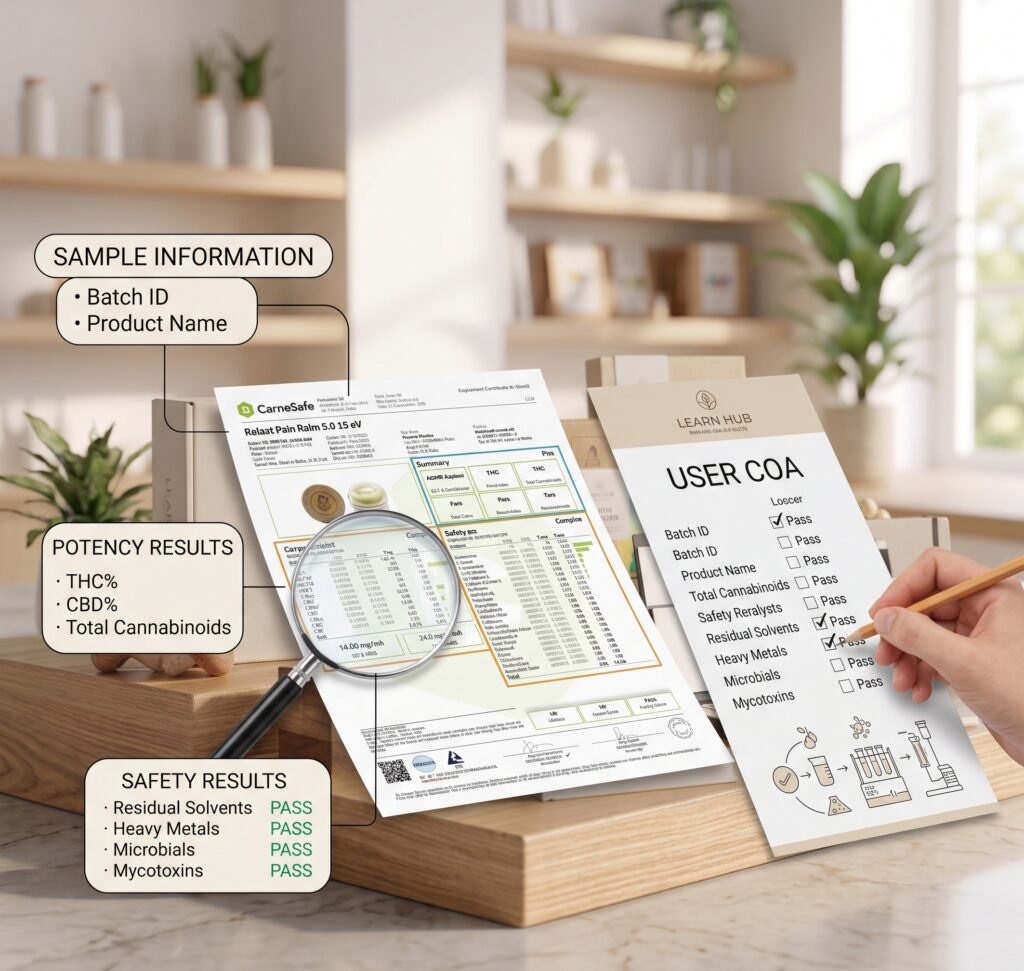
Knowing how to read a COA is the fastest way to buy hemp products with total confidence. Every reputable brand posts a lab report, yet most buyers never look past the packaging. This guide to how to read a COA covers the seven checks that separate a real report from a copy-paste PDF, from batch numbers to contaminant testing.
A certificate of analysis tells you, in plain numbers, what sits inside the product. First, match the report to the exact batch in your hands. Next, read the cannabinoid potency figures. Then, check the contaminant testing column. The same order works for every coa lab test you will meet, from delta 8 vapes to THCa flower. None of these steps takes more than a minute, and any report that passes all of them describes the product honestly.
On this page:
How to Read a COA Before You Buy
The rules for how to read a COA follow one idea: every number on the page should trace back to one specific batch. Labs test each batch separately. When a brand posts a single report for an entire product line, that is the first warning sign.
Look for the report that matches the package in your hands, not the prettiest report on the website. The batch number, the product name, and the dates should all line up. If any of the three is missing, ask for a fresh report before you spend a dollar.

Start with the Batch Number and Dates
Knowing how to read a COA starts with the batch number. Every real report names the batch it tested, and that number should match the one printed on your package. Sellers who skip this step usually have something to hide.
Reading a COA Lab Test in the Right Order
Follow this order every time, so a coa lab test takes under two minutes:
- Compare the batch number on the report with the batch on your package.
- Check the tested date. Fresh batches beat old ones.
- Confirm the product name matches the label wording.
- Keep the report that names the same strain and format you bought.
An old report is not proof of a new batch. Some brands recycle a month-old PDF for months. When the dates look stale, your certificate of analysis is doing less work than it should.
Check Cannabinoid Potency Numbers First
Cannabinoid potency is the number people quote first, and it deserves that spot for anyone learning how to read a COA. The report lists each cannabinoid as a percentage. For flower and vapes, the two figures that matter are THCa and THC. For edibles, look for milligrams per serving instead.
- THCa describes flower before heat. Heat converts it into the active form.
- Delta 8 and delta 9 appear as separate lines on most reports.
- Total THC adds any active THC plus the amount THCa will become.
When potency numbers on the label sit higher than the report, the label is wrong. Trust the report. A brand that prints one number and tests another has failed the simplest honest test there is.
Comparing potency across batches gets easier with practice. Many buyers check the cannabinoid potency column before they check anything else, because that column predicts the whole experience.
Contaminant Panels: What Clean Really Means
Clean results are the part of every report that protects you. Labs test for microbes, heavy metals, pesticide residue, and leftover solvents. Each panel should show a limit and a result that sits safely under it.
Contaminant testing matters even more for vapes, because heat can carry solvents into the vapor. Look for the words “pass”, “ND” (none detected), or clear numeric results. A blank panel means the lab did not run the test.
Independent labs follow recognized standards. Accredited labs add an extra layer of trust, so search the A2LA accreditation directory to confirm the lab on the report is real.
| What to check | Where to look | A pass looks like |
|---|---|---|
| Batch number | Top of the report | Matches your package label |
| Potency figures | Main cannabinoid panel | Label claims match the numbers |
| Microbes, metals, solvents | Contaminant panels | “Pass” or “ND” on every row |
| Lab name and accreditation | Footer or letterhead | Real lab listed in a directory |
| Dates | Header lines | Tested recently, batch matched |
How to Verify a COA Online in 3 Steps
Verification separates a real report from a pretty fake. Checking a certificate of analysis online takes three steps, and each one takes seconds.
- Find the lab name on the report and visit the lab’s own website.
- Open the lab’s search or verification page and enter the batch number.
- Compare the returned record with the PDF you were given.
A real lab returns a matching record. If the search yields nothing, the report is likely a forgery. You can run this same flow to verify a certificate of analysis for any brand, in any shop, before you buy.
How to Spot a Fake COA
Once you know how to read a COA, spotting the fakes becomes simple. Fake reports share the same tells, and the first is laziness. The product name is generic, the batch number is blank, or the same PDF covers every product on the site.
- Generic wording such as “sample product” on the header.
- No lab phone number or address anywhere on the page.
- A logo that looks close to the real lab but slightly off.
- A QR code that leads nowhere or to a social profile.
Counterfeit products ship with counterfeit paperwork. The FDA keeps a public page about counterfeit medicine risks, and the same warning applies to vape carts and edibles sold with fake reports. When the report is fake, treat the product as fake too.
Certificate of Analysis vs. What the Label Claims
In short, how to read a COA means comparing three things: the batch, the potency, and the clean results. The certificate of analysis is the ground truth for a product, and the label is a summary of it. The two should agree on potency, servings, and format. When they disagree, the report wins.
Every listing in our COA Library carries the batch report next to the product page, so you can compare the label with the certificate of analysis before checkout. Once learned, that habit never leaves you, and it is why we publish contaminant testing results openly instead of burying them in support tickets.
Fake reports copy logos but rarely copy data. Cross-check the lab’s listed website against the address on the report, and call the lab if the numbers look off. Labs answer the phone when buyers verify.
You now know how to read a COA well enough to buy with your eyes open. Put the checklist to work in the COA Library, where every listing carries its batch report. Then pair the skill with the THCa buyer guide and the state legality map before you order. When you are ready, browse the full shop for lab-tested delta 8 vapes, THCa flower, and clean edibles, and check our shipping and returns page for fast, discreet delivery. Revisit the Learn Hub whenever a new hemp question comes up, and use this how to read a COA checklist on your next order.
Quick Answers Before You Order
What does COA mean on a hemp or delta 8 product?
COA stands for certificate of analysis. It is the lab report a brand receives after an independent lab tests a batch. Labs check potency, purity, and the presence of contaminants.
Do all hemp brands share a lab report for every batch?
The best brands publish one for every batch. Always ask for the report for the exact batch in your hands. A generic PDF is not proof.
Which numbers matter most on a lab report?
Cannabinoid potency tells you how strong the product is. The pass or fail results for microbes, heavy metals, and residual solvents matter just as much.
Can a lab report be faked?
Yes, fake reports exist. Check the lab’s website, call them, or use their online search tool with the batch number. Real labs verify their own results.
