
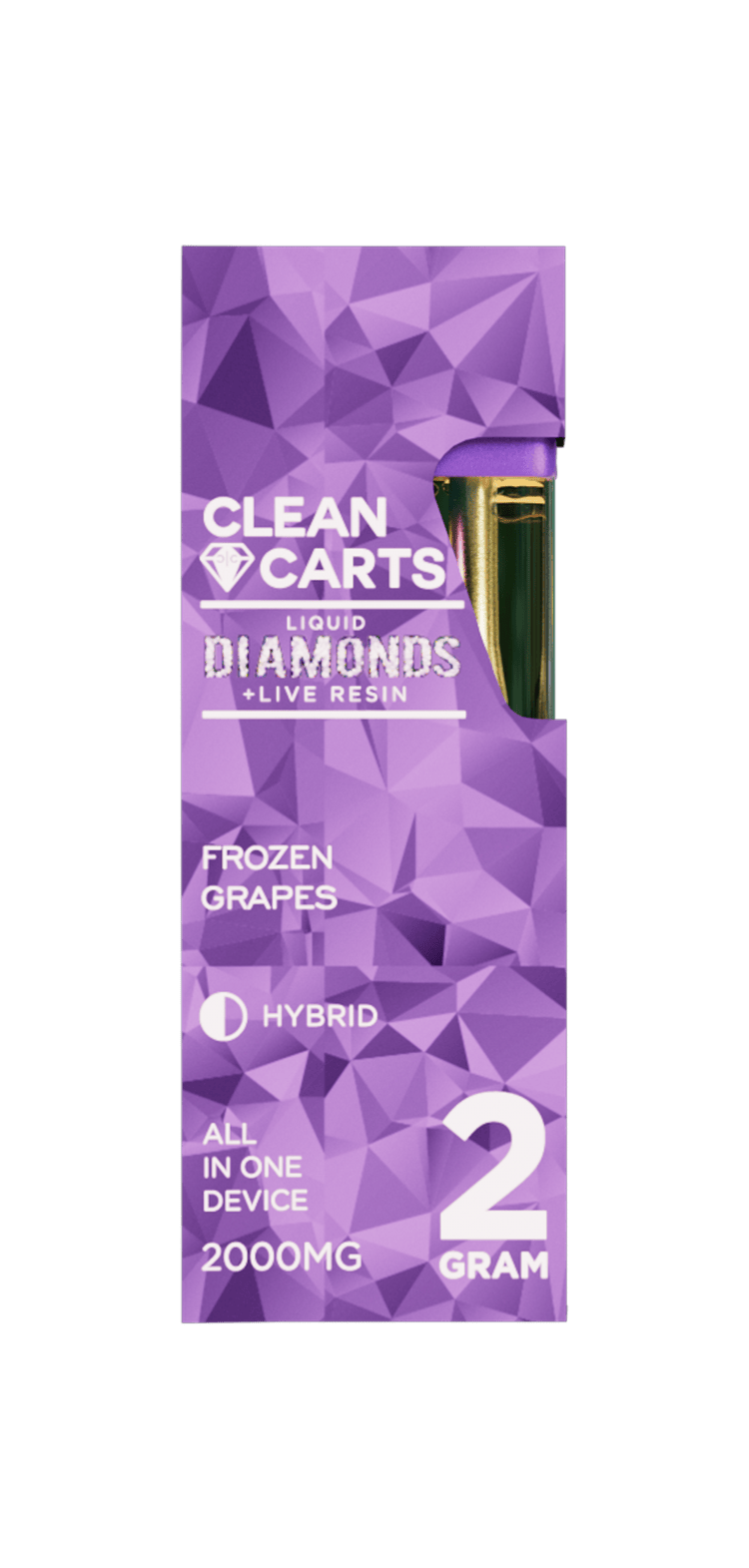
The Frozen Grapes Clean Carts All In One brings the Frozen Grapes profile to a sealed all-in-one device. We also keep the Frozen Grapes Disposable Vape and the Frozen Grapes All In One Device in one case. The Frozen Grapes THC Vape also sits beside them on the same shelf. Even shoppers who buy frozen grapes clean carts pay under the brand’s own list.
Why the Frozen Grapes Clean Carts All In One Stands Out?
The Frozen Grapes All In One Device carries the Frozen Grapes profile from the first steady pull to the last. The sealed unit also keeps that profile intact between orders. Every batch ties to a lab sheet, so you can check the numbers first. We keep the Frozen Grapes All In One Device priced below the brand’s own store as well. The Frozen Grapes Disposable Vape, the Frozen Grapes Clean Carts All In One, and the Frozen Grapes THC Vape share one flavour family as well. The Frozen Grapes Disposable Vape, the Frozen Grapes Clean Carts All In One, and the Frozen Grapes THC Vape share one flavour family as well.
Most buyers Buy Frozen Grapes Clean Carts after they try the Frozen Grapes Clean Carts All In One once. Customers also Buy Frozen Grapes Clean Carts and keep the Frozen Grapes Clean Carts All In One for daily use. Repeat buyers treat the Frozen Grapes Clean Carts All In One as a safe reorder. The Frozen Grapes Clean Carts All In One stays in stock until the season ends. Most buyers also add the Frozen Grapes Clean Carts All In One to a mixed order. When you Buy Frozen Grapes Clean Carts, pair the Frozen Grapes Clean Carts All In One with a second flavour.
The Frozen Grapes Clean Carts All In One travels well, because the seal holds through transit.
What Comes With the Frozen Grapes Disposable Vape?
Every order ships the Frozen Grapes Disposable Vape as a sealed retail unit. The Frozen Grapes All In One Device then carries the same Frozen Grapes blend. The Frozen Grapes THC Vape covers the same profile in a smaller step. A mixed order covers two moods without doubling the spend. Each box prints the batch code and the serving guide. Most buyers Buy Frozen Grapes Clean Carts after they try the Frozen Grapes Disposable Vape once. When you Buy Frozen Grapes Clean Carts, pair the Frozen Grapes Disposable Vape with a second flavour. Customers also Buy Frozen Grapes Clean Carts and keep the Frozen Grapes Disposable Vape for daily use.
- Format – 2G all-in-one device.
- Blend – liquid diamonds + live resin.
- Potency – 85–90% THC (batch dependent).
- Type – all-in-one disposable device.
- Best for – All-day convenience, no battery.
The Frozen Grapes All In One Device, the Frozen Grapes Disposable Vape, and the Frozen Grapes THC Vape share one flavour family as well. The Frozen Grapes Disposable Vape, the Frozen Grapes All In One Device, and the Frozen Grapes THC Vape all carry the same sealed profile as well.
How Do You Use the Frozen Grapes All In One Device?
Start with one steady pull. Wait a few minutes before you judge the effect. The Frozen Grapes All In One Device rewards a slow, steady habit rather than a long one. The seal keeps the Frozen Grapes fresh between orders. Most people also keep the Frozen Grapes All In One Device on the shelf for daily use. They reach for the Frozen Grapes THC Vape when the session runs long.
Is the Frozen Grapes THC Vape the Right Pick?
The Frozen Grapes THC Vape suits anyone who wants the Frozen Grapes profile without a long session. New shoppers often begin with the Frozen Grapes THC Vape first. They move to the Frozen Grapes All In One Device once they know their pace. The Frozen Grapes flavour stays consistent across the whole line as well. Even so, a switch rarely surprises anyone.
Buy Frozen Grapes Clean Carts Online
You can buy frozen grapes clean carts in a few clicks. Ready to buy frozen grapes clean carts? Add one to the cart and compare it with a second flavour. Many customers buy frozen grapes clean carts in pairs, because a mixed order splits the shipping cost.
Price, Value, and Shipping
Our price lands about 12% below the brand’s own list. The sealed unit stays identical. Orders leave within one business day. Standard delivery takes two to five business days. Tracking arrives by email as soon as the label prints. Overall, the value case stays simple. So the same retail unit, the same paperwork, and a clearly lower total.
Where the Frozen Grapes Range Fits
The Clean Cart Disposables category lines up every format in one grid. You can also compare strength and format in a single view. Gogi OG all-in-one devices, Grape Sorbet all-in-one devices, and Limonada all-in-one devices also sit in the same family. The shop holds the rest of the menu. Batch sheets sit in the COA library. The learn hub walks through the basics. Meanwhile, questions go to the contact page. Delivery terms live on the shipping and returns page as well.
Table of Contents
Building a Reorder Routine
A simple reorder routine saves the frustration of running out midway through a week. Note how long a unit usually lasts you, then set a reminder a few days before that point. Ordering ahead also gives you time to add a second profile without a special trip.
Keeping a short list of the batches you liked makes reordering easy. Write down the batch code and a one-line note about flavour and feel. Over a few months that list becomes a personal catalogue, and you stop relying on memory when you sit down to place the next order.

Mixing Profiles in One Order
Buying two profiles at once is usually smarter than doubling up on one. Variety keeps sessions interesting, and a mixed order often splits fixed shipping costs across more value. It also lets you compare two batches under the same conditions instead of weeks apart.
Pick one familiar profile and one that is new to you. Use the familiar unit as your baseline, then try the new one in a calm setting. If the new batch suits you, it joins the reorder list; if not, you have lost nothing but a single evening of curiosity. That is a fair trade.
Pairing Profiles by Mood
Flavour and setting shape a session as much as the oil does. Brighter, citrus-led notes tend to suit daytime use and short breaks, while creamy or dessert-style profiles often fit quieter evenings. There is no rulebook, only patterns most people notice in their own routine.
Match the profile to the setting rather than the other way around. A calm evening at home invites a slower pace; a quick daytime break calls for a lighter touch. When you find a pairing that works, note it. A short pairing list turns a shelf of options into a set of reliable choices.
Reading Indica and Sativa Labels
The old indica and sativa labels describe broad plant categories, but modern hybrids blur the line. Two products sharing a label can feel quite different once the chemistry is measured. Treat the label as a starting hint, not a precise description of the experience.
What matters more is the specific profile and how the batch was produced. Read the flavour notes, the format, and any stated effect, then decide whether that fits your moment. If you are unsure, start with a small quantity and let your own experience write the final verdict.
Understanding Hybrid Profiles
Hybrid profiles combine traits from both broad plant categories, and breeders tune them for balance rather than extremes. The result is a spectrum: some lean toward bright and active, others toward calm and mellow. The name alone rarely tells you where on that spectrum a product sits.
Use the flavour description and any stated intention as your compass. A profile described as balanced usually behaves that way for most people, while a clearly-leaning one will suit a more specific moment. When in doubt, buy a small unit, try it early in an evening, and decide from your own notes.
Reading Flavour Notes Like a Buyer
Flavour notes are shorthand for the aroma families a batch draws on. Citrus, berry, and tropical descriptors point to bright, fruit-forward character, while cream, pastry, and spice suggest a rounder, warmer finish. The words are a guide, not a promise, because heat and hardware also shape the result.
Use the notes to narrow a shelf, then rely on your own taste to finish the job. If you like bright profiles, try one citrus-led and one berry-led option side by side. Comparing two units in the same week tells you more than reading a dozen descriptions. Experience is the better teacher here.
Comparing Cost Per Session
Unit price is only part of the picture. What matters is the cost per session, which depends on how long a unit lasts and how often you use it. A slightly pricier batch that lasts well can cost less per evening than a cheap one that runs out fast.
Track a few units and note how many sessions each delivers. That simple record turns a pile of prices into a real comparison. Buying two at once often reduces shipping per item, which lowers the effective cost as well. Value is a ratio, not a single number on a tag.
Spotting a Counterfeit Seller
The clearest signal of a fake is a deal that looks too good and presses you to act fast. Pressure, missing contact details, and vague shipping terms all point the same way. A legitimate seller answers questions plainly and publishes clear policies.
Check for a real support channel, a stated address or jurisdiction, and documentation such as batch records or certificates. If those are absent, the risk runs higher. When something feels off, pause and verify through an independent source. A few minutes of checking can prevent a disappointing order.
Questions to Ask Before You Buy
Before ordering, confirm the format, the volume, the batch code policy, and the return terms. Ask how the product is sealed and how it ships. A seller who handles these questions easily is usually organised behind the scenes as well.
It also helps to ask how support works if something goes wrong. Knowing the channel ahead of time means you are not searching for it during a problem. Finally, check that the listing states the delivery estimate in business days, not vague promises. Clarity before the sale is the best predictor of service after it.

Seasonal Availability and Restocks
Producers work in batches, so a popular profile can sell through and then restock weeks later. Availability shifts with demand and with the harvest calendar. A unit that is missing today may return next month, and a less familiar profile may sit quietly in stock.
If a favourite is out, a short wait or a close alternative usually solves the problem. Keep a second option on your reorder list so a restock delay does not interrupt your routine. Checking availability before you commit saves a disappointing order and keeps expectations realistic.
Support That Answers Real Questions
Good support replies with specifics, not scripts. It confirms your order number, checks the carrier record, and explains the next step in plain language. A team that can speak to the batch code and the shipping status is one you can rely on when something goes sideways.
Keep your messages short and factual: the order number, the batch code, and a one-line description of the issue. That gets you a useful answer in the first reply. Save the confirmation email until the unit is finished, since it holds the details support will ask for.
What a Good Product Page Tells You
A clear product page answers the important questions without a detour. It states the format, the volume, the flavour family, and the shipping or return terms. It shows what arrives in the box and how it is sealed. Detail here saves a round of messages later.
It should also guide a new buyer toward a sensible first use and offer an easy way to reach support. If a page hides the basics or exaggerates results, take that as a signal. Compare two or three listings and notice which one informs rather than pressures. The better page usually belongs to the better seller.
Battery Safety Basics
Treat a battery as what it is: a small energy store that deserves respect. Use the cable provided, avoid leaving a device charging unattended overnight, and stop charging if the casing grows hot. Replace a battery that swells, leaks, or stops holding a charge rather than pressing it back into service.
Store spare batteries away from metal objects that could bridge the contacts. Keep them at room temperature and out of direct sun. When a battery reaches the end of its life, recycle it through an appropriate scheme. A few sensible habits keep day-to-day use uneventful, which is exactly what you want.
Refillable and Prefilled Compared
Prefilled units arrive ready to use and need no handling of oil, which suits anyone who values convenience. Refillable hardware costs more up front but lets you change profiles more often and reuse the battery many times over. Both approaches have loyal users.
Choose based on your habits rather than on hype. If you like variety and do not mind a little maintenance, refillable gear can be economical. If you prefer to open, seal, and go, prefilled units remove the fuss. The right answer is simply the one that fits how you actually use the product.
Temperature and Flavour Preservation
Temperature is the single biggest lever on flavour. Low power protects delicate notes and delivers a cleaner, cooler vapour, while high power produces more volume at the expense of nuance. Most people find their favourite setting somewhere below the maximum.
Change one variable at a time when you experiment. Adjust the power, take a draw, and pause before judging. Once you find a setting that suits a batch, write it down. A short personal log makes every future unit easier to enjoy from the first pull instead of the tenth.
Making an Order Go Further
Small habits stretch both the product and your budget. Store upright, draw slowly, and keep the power modest, and a unit tends to last as long as it should. Combine two profiles in one order to spread shipping, and reorder before you run out to avoid rushed choices.
Keep a running note of batch codes you enjoyed and the settings that suited them. Over time that note becomes a personal guide, and ordering turns into a quick, confident task rather than a guess. Good value comes from knowing what you like and buying it deliberately.
How a Cartridge Works
A cartridge pairs a small reservoir with a heating element and a mouthpiece. Liquid sits in the reservoir and wicks toward the coil, where a short pulse of current turns it into vapour. Because the parts are sealed at the factory, the user never handles the oil directly. That keeps the experience consistent from the first pull to the last.
The thread pattern on the base decides which batteries fit. A standard 510 connection is the most common, so most universal batteries accept it without an adapter. Check the thread before you buy a new battery, then match the wattage range printed on the package. A matched pair runs cooler and tastes cleaner.

Ceramic Coils and Cotton Wicks
Two wick materials dominate modern hardware. Cotton soaks quickly and delivers flavour fast, though it can scorch if the reservoir runs dry. Ceramic heats more evenly and holds up to repeated sessions, which suits anyone who takes long, slow draws. Neither option is automatically better; the right pick depends on how you use the device each day.
A ceramic core tends to preserve delicate top notes, while a well-built cotton wick can feel punchier on the inhale. If you switch materials, give yourself a session or two to adjust. Small differences in airflow and heat often matter more than the marketing label on the box.
Live Resin and Distillate Compared
The starting material shapes everything downstream. Resin-style oil is drawn from freshly harvested plant material and keeps a broader spread of natural compounds, which shows up as a fuller, more layered flavour. Distillate is refined further and lands closer to a single note. Both have a place, and both can be excellent when the producer works carefully.
Refined oil is filtered to remove waxes and plant fats, leaving a smoother liquid that feeds cleanly through a wick. That clarity often translates into a more consistent pull. If you enjoy nuance over punch, lean toward the less-processed option; if you want repeatable, even sessions, the refined route is easier to predict.
Why Terpenes Shape Flavour
Terpenes are the aromatic compounds that give every batch its character. They carry notes that read as citrus, berry, cream, or spice, and they influence how a profile feels on the palate. Heat is their main enemy. Too much power at the coil flattens the brighter notes and leaves a harsher finish.
Keeping the temperature modest protects those compounds. A gentle preheat, a short draw, and a pause between pulls all help. If a batch tastes muted straight away, it is usually the device setting rather than the oil. Dial the power down and try again before you judge the flavour.
The Value of a Sealed Retail Unit
A factory seal does more than look tidy. It guarantees that nobody has opened, diluted, or refilled the unit before it reaches you. It also keeps the oil from oxidising in transit and stops dust or moisture from reaching the mouthpiece. For the buyer, the seal is the simplest proof that the product is what it claims.
When a parcel arrives, check the seal before you break it. A clean, intact wrap with a legible batch code is a good sign. If the seal is torn or the label looks reprinted, set it aside and contact the seller. That single habit filters out most reselling problems before they reach your device.
Reading the Batch Code
A batch code is a short identifier printed on the unit or its box. It links your specific run to the producer’s internal records, including the date of manufacture and the lab results for that lot. Two units with different codes may look identical but come from different production days.
Keep the code handy until you have finished the unit. If any question comes up later, the code lets support pull the exact record instead of guessing. Photograph the label when the parcel arrives and store it with your order confirmation. That small step saves time if you ever need to raise a concern.
How to Store a Cartridge
Store upright, in a cool, dark place, away from direct sun. Heat thins the oil and encourages leaks, while light slowly degrades the aromatic compounds. A drawer or a box works better than a windowsill. Room temperature is usually fine; extreme cold can thicken the oil and slow the first draw.
If a unit has been sitting for weeks, stand it upright for a few hours before use. That lets the oil settle back toward the wick. Wipe the thread with a dry cloth before you attach it, since a little residue on the contacts can weaken the connection. A clean thread means a steadier session.
Heat, Viscosity, and Draw Quality
Viscosity describes how thickly a liquid flows. Cooler oil moves slowly and can starve the wick, which tastes dry and harsh. Warmer oil flows easily and feeds the coil well, but too much heat thins it further and can flood the airway. The sweet spot sits in a narrow middle range.
A variable battery lets you find that middle range for each batch. Start low, take one draw, and step up only if the vapour feels thin. Most people settle a half step below the maximum they can tolerate. That habit protects flavour and stretches the life of the hardware.

Where to Verify and Learn More
Independent references make it easy to check a batch before you commit. The NIDA research overview explains how the compounds in this category are studied and measured, and it is a useful starting point if the numbers on a label are new to you. Pairing that background with the batch code on your own unit puts the printed figures in context.
The producer’s official product site lists the original range, the packaging, and the flavour families behind each profile. Comparing it with our shop takes a minute and confirms the format and the seal you should expect when the parcel arrives.
Frequently Asked Questions
How does the Frozen Grapes Disposable Vape compare with the Frozen Grapes All In One Device?
Both carry the Frozen Grapes profile. The difference instead sits in the format. One suits a short session. But the other fits a longer evening. Order them together if you want to compare side by side.
How should I pace the Frozen Grapes THC Vape?
First, start with a single steady pull. Wait a few minutes before you judge the effect. Most people use it after dinner. Then they decide about a second one. Nothing about the routine changes between batches.
How fast will my order arrive?
Orders leave our facility within one business day. Standard delivery takes two to five business days. Tracking reaches your inbox as soon as the label prints. A sealed unit and the printed batch code travel with every parcel as well.
Be the first to review “Frozen Grapes Clean Carts 2.0G All-In-One Device”
Related products

Clean Cart Disposables
Clean Cart Disposables

Clean Cart Disposables
Clean Cart Disposables
Clean Cart Disposables
Clean Cart Disposables

Clean Cart Disposables
Clean Cart Disposables
Reviews
There are no reviews yet.